
Maintaining Employment while Disabled - a Personal Perspective

If You’re Too Sick to Work, Are You Too Sick to Survive?
While we are still in July, which is Disability Pride Month, I think it’s necessary to address the topic of disability and employment. The article below is a reprint of one I posted in July of last year.
This month has been a little rough with the heat and air quality and some recurring arrythmias getting me down, so I thought this was a good topic to revisit. It is still as important as it was a year ago, perhaps even more so.
Below I discuss my experience with finding employment while disabled. These events occurred primarily between 1986 and 2000, with the post-transplant mentions happening between 2007 and 2013. Although the ADA was signed into law in 1990, it was not well-enforced, especially in the early 1990s.
If you know anything at all about me, you know that I have received two heart transplants. The first transplant occurred in 2006, shortly after I turned 38 years old. But that doesn’t mean I was healthy prior to the transplant.

When I was born, there was nothing to lead doctors to believe I had any medical condition. During my toddler years, I would frequently struggle to breathe with exertion, leading to multiple trips to the emergency room and a diagnosis of asthma.
After I passed out at the age of 7, the pediatrician detected a heart murmur and referred me to a hospital in the city. There I was diagnosed with Idiopathic Hypertrophic Subaortic Stenosis. Later the name would change to Hypertrophic Cardiomyopathy (HCM), a fairly common genetic heart defect that affects as many as 1 in 250 people.
This genetic heart condition meant that I had a pre-existing condition from birth, making me uninsurable since health insurance providers would not write a policy for an individual who already had a health condition.
I have a mental image of several insurance company CEO’s sitting around a posh board room in top hats and smoking cigars, laughing at my insurance application and saying, “That kid’s screwed for life!” then taking a drink of cognac from a snifter.
Lucky for me, we were dirt poor, which made me eligible for Medicaid. Doctor visits, annual testing, and daily medications were covered in full until my 18th birthday.
Once I turned 18, everything changed.
Fresh out of high school, it’s pretty hard to find a job with benefits like health insurance. I bounced around jobs in fast food, telemarketing, and working a register at K-mart. All were part-time jobs. Later I found more money in tipped professions such as waitressing and bartending, but those jobs didn’t provide insurance either.

Without insurance, I was constantly in medical debt for doctor visits and tests, and I had to struggle to scrape together enough money each month to purchase my medication. If I earned enough at my various jobs to pay rent and buy groceries, I made too much money to be eligible for Medicaid. If I wasn’t homeless and hungry, I was too rich for assistance.
On several occasions I tried to get medical coverage through the state program but was always denied. Because of the lack of insurance and lack of cash, I often delayed annual medical testing and skipped doctor visits. Sometimes I went without my meds because I couldn’t afford them, or the doctor refused to renew my prescription without an office visit.
While I kept chugging away on the treadmill of the working poor, I kept attending the community college on a part-time basis. I believed that my only way out of that endless grind was to get a degree so I could get a job in an office where I would finally have health insurance. My persistence paid off, and I found a secure office job shortly before I turned thirty. I didn’t know it at the time, but I was already sliding into heart failure.

During my twenties, my heart would give me trouble every now and then. Factory work was impossible. Temperatures on the factory floor soared close to 100 degrees, making me short of breath, light-headed, and close to fainting – a common occurrence in HCM. I couldn’t make production on a factory job anyway. My fingers have always been stiff and awkward, my handwriting an illegible scrawl. Daily use pinching clips made them swell like sausages. But I could type 120 words per minute. I thought I found my niche in data entry, but I developed carpal tunnel and had to give up that job after a couple of years.
At many of those entry-level jobs, I was often requested to do something I couldn’t physically do. One bar-tending job required me to carry several cases of beer up a flight of stairs from the cooler. Huffing and puffing after one case, I had to sit and catch my breath before I went back for another. The bar manager scolded me for sitting down on the job and I explained my heart condition. He responded with the words I’ve heard in one variation or another from employers over the years.
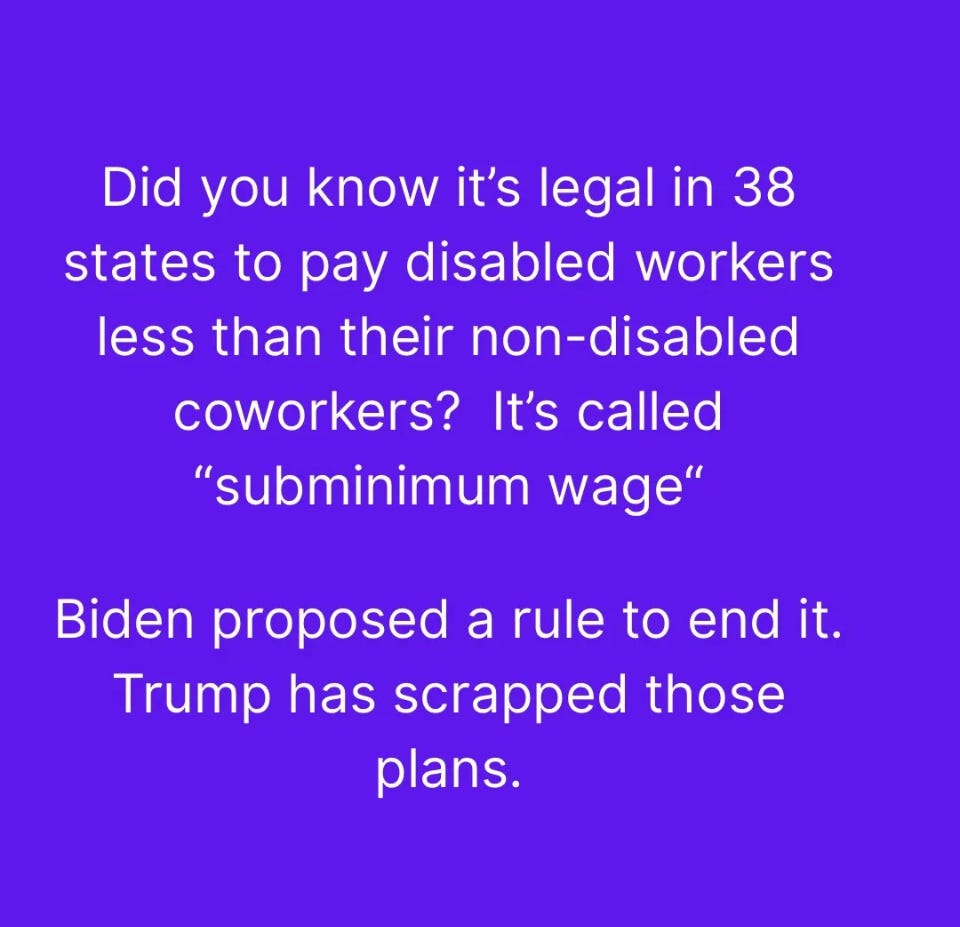
“Why am I paying you the same amount of money as everyone else working here when you can’t do the same amount of work?”
Those words usually preceded getting fired.
Dynamic Disability
Many people don’t understand the concept of “dynamic disability.” The definition via Google:
Dynamic disability refers to a condition or impairment that fluctuates in severity and impact over time. Unlike static disabilities, which remain constant, dynamic disabilities may have periods of remission or exacerbation, meaning that the type or severity of symptoms can change, affecting a person's abilities. This concept is particularly relevant for individuals with chronic illnesses, where symptoms may worsen or improve over varying periods.
With HCM, you can have good days and bad days. This means that you might be able to do something one day but not another day. Even the objective results of the same cardiac testing can vary dramatically depending on whether it is a good day or bad day. Whether I ate too much salt at a meal; whether my body is holding too much fluid thus causing my heart to work harder to do the same job. This means that my ability to work those jobs varied from day to day, but as I grew older and my condition got worse, the number of bad days increased.
There were jobs in my twenties where I said I couldn’t do certain tasks, and I was called a faker or lazy because I was capable of doing those things on some days and not on others. Sometimes I pushed myself to do it anyway when I knew I couldn’t or shouldn't just to keep the peace and wound up making myself sick or nearly passing out.
Employment Difficulties After Transplant
At an office job I found after my first heart transplant, when my employer knew I had a heart transplant, I was asked to help carry boxes of old files down from an upstairs storage area and out to the dumpster. It was an office-wide effort and everyone else was helping. I said I couldn’t do it, and the boss belittled me in front of my coworkers. Several of them also made snide remarks about how I was a “princess” who didn’t have to work like the rest of them. He encouraged their cruel remarks.
That post-transplant employer was a real peach. I was hired due to my experience in a specific field of work, and I made the company a lot of money, but I also fell sick and missed work due to being immunocompromised.
That boss knew I needed the job for the health insurance to pay for my medical bills and transplant medication, and he would rub that in my face and basically told me I had to put up with however he treated me because my insurance, and thus my life, depended on it. Eventually I got fired but I really wish I had quit instead of wasting so much time being miserable.
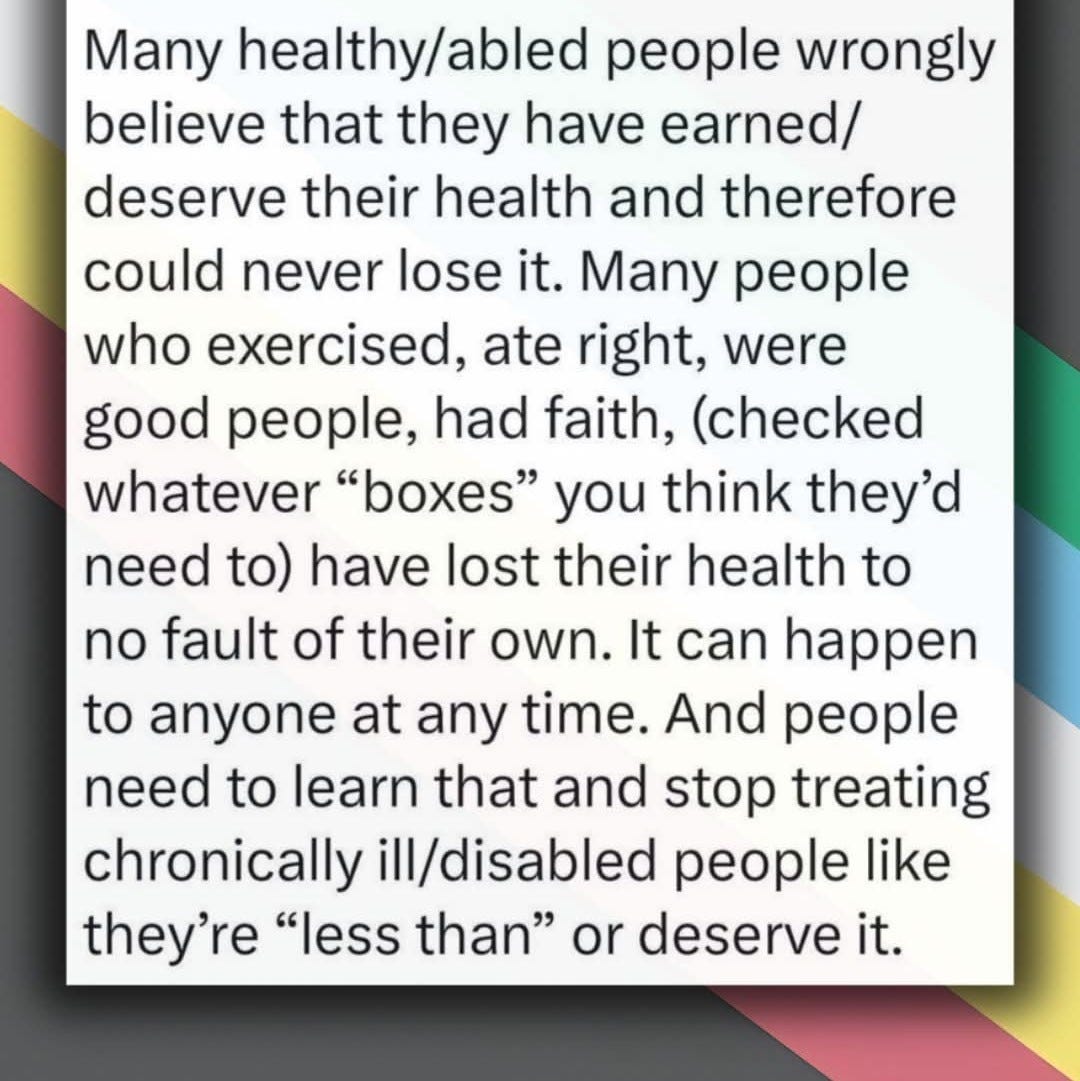
The next employer also wanted my expertise, but they knew about my heart transplant, so they offered to hire me as a contract employee. This meant they would pay me for my work but not provide any benefits, including health insurance. They knew they had me over a barrel because I needed a job. Luckily, I found a good job with good insurance after nine months as a contractor.
At this point, you’re probably wondering why I’m telling you about my health and employment history. My purpose is to explain that I have always had a disability, one which fluctuated in its severity over time, gradually getting worse, and how it impacted by ability to obtain and retain employment.
During those years, I could not access Medicaid because it is very difficult to be approved for it, and at the same time I struggled to remain employed because of my disability. Once I found a job that gave me access to health insurance, I gained access to better doctors who prescribed a better drug regimen, which improved my functional capacity and allowed me to be a better employee.
It’s that age-old adage: The spirit is willing, but the flesh is weak. I wanted to work, but my body wasn’t always eager to cooperate.
My hope is to shine a light on the fact that finding and maintaining employment can be a difficult and frustrating experience for individuals with a disability. Without access to adequate medical care, health conditions can worsen which decreases the ability to work, feeding a downward spiral.

A disproportionate percentage of the disabled population live in poverty or are homeless because of this issue. When you’re too sick to work, society might consider you unworthy of assistance. Unworthy of living.
Most people don’t realize that the odds of becoming disabled increases with each passing year. No one is immune. It only takes one accident or illness. If you live long enough, you will end up with some form of disability.
The tradition of tying health coverage to employment carries the potential of placing vulnerable individuals at the mercy of an unscrupulous employer. Unable to leave without losing coverage, they put up with increasingly abusive treatment so they can obtain the healthcare they need to continue living.
In an ideal society, health care would be available to everyone. The Affordable Care Act did away with the ability for insurance companies to deny coverage for pre-existing conditions only a decade ago, but it has long been on the Republican agenda to eliminate, or at least sharply cut, the ACA. With the recent passage of the budget bill and the corresponding cuts to Medicaid, it looks like they are well on their way to dismantling the ACA.
America may soon return to the bad old days where people will suffer and die from treatable ailments because they cannot afford medical care once insurance companies deny those most in need. Children born with heart defects, Type I diabetes, cerebral palsy, among others, could be denied insurance coverage for a lifetime.
Pay attention to what is happening to health care in America and contact your state representatives and senators. Speak up to keep America healthy.
Thank you for coming to my TED talk.
Please share your opinions in the comments below, and please share this with your friends to help them understand the struggles involved in disability and employment.
Thank you!
I know what you are talking about, Dawn. I had to go on Medicaid after I gave birth to my son back in 1975. I had no insurance and my ex and I were divorced. I was on Medicaid until my son turned 12. (I was taking care of my elderly, sickly mother until she died.) But I had gotten healthcare for him until he graduated. I found jobs but without health insurance and I couldn't see doctors or get tests for anything. One doctor told me to get insurance so he could have a test done. So, I asked my employer to get me insurance and he practically took my whole paycheck every week for insurance! But if it wasn't for the overtime, I'd have no paycheck. But after surgeries and the one surgery I developed a huge hernia, I quit work! And my doctor told me to apply for disability. I did and after 6 months, I got my SS disability check with past months payments. I was taken off of disability when I turned 65 and put on regular SS. I was receiving Medicaid back then until now. I received a letter claiming I am over the limit and I have other income! I have no idea what other income I am supposedly have! I only have SS and I am either below the limit or at the limit! But I will appeal! And I just receive my first bill from a doctor for almost $200! So, you can see where this is going! Back to the past without healthcare!
There is a loophole in the ACA (Obamacare) that everyone with dynamic disabilities should know. If you can write on Substack and gain paid subscribers, guess what? You’re a business owner. Then you already have a foot in the door for an affordable Silver ACA plan with Cost Sharing Reductions.
Don’t believe me? I am not an insurance agent. I am an applied anthropologist, certified hypnotherapist, business advisor and business owner with 34 years of self-employment.
Go read what I discovered about the special treatment self-employed people get as business owners under the ACA. If you have questions, please DM me.
The article is from my publication Field Notes from the Dig, June 3, 2026, entitled, Excavation: When the System Says You Don't Qualify https://jackieambrow.substack.com/p/when-the-system-says-you-dont-qualify?r=6jaztx